Moving to Big Bear: What to Know Before You Make the Move
Thinking of making Big Bear your home? A warm, honest guide from a Big Bear native to what to know before you move: the roads, the seasons, how mountain homes run, and the pace of life up here.
Maybe you have been coming up to Big Bear for years, or maybe you visited once and could not stop thinking about it. Either way, the idea has taken hold: you want to make the mountains your home. I have helped a lot of people make that exact move, and as a lifelong Big Bear resident, I want to tell you it is worth it, and I want you to go into it with your eyes wide open. Here is what to know before you move to Big Bear, from a native who has lived every season of this valley.
Big Bear is really two towns, plus a few more
One of the first things new arrivals learn is that "Big Bear" is shorthand for a whole valley, not a single town. On the west side sits the city of Big Bear Lake, the incorporated resort hub with The Village, the marinas, and the lakefront parks. Just to the east sits Big Bear City, an unincorporated community with its own ZIP code and a more rural, residential feel, where the county handles the services. Around them spread the neighborhoods people really live in: Fox Farm, Moonridge, the Summit side near Snow Summit, quiet Fawnskin on the north shore, and farther east, Sugarloaf and Baldwin Lake. Each one has its own personality, elevation, and rhythm. I wrote a whole guide to the communities around the valley, and it is genuinely one of the first things I read with new buyers, because where you land shapes your whole first year here.
The drive up the mountain is part of the deal
You cannot move to the mountains without making peace with the drive. Three main routes come up: Highway 330 out of Highland, which becomes Highway 18 at Running Springs, is the most popular and the steepest; Highway 38 from Redlands and Mentone winds up with gentler grades and is a favorite for trucks and trailers; and Highway 18 from Lucerne Valley approaches from the north with less winding. On a clear day you can get from San Bernardino up to the valley in about 45 minutes to an hour, and from LA or Orange County in about two hours. On busy winter weekends, the same drive can stretch much longer, so the smart move is to check road conditions before you go, leave early, and never be in a hurry. Locals learn the rhythm of the mountain quickly, and it stops feeling like a chore and starts feeling like a winding scenic commute home.
Winter asks a little more of you, and of your car
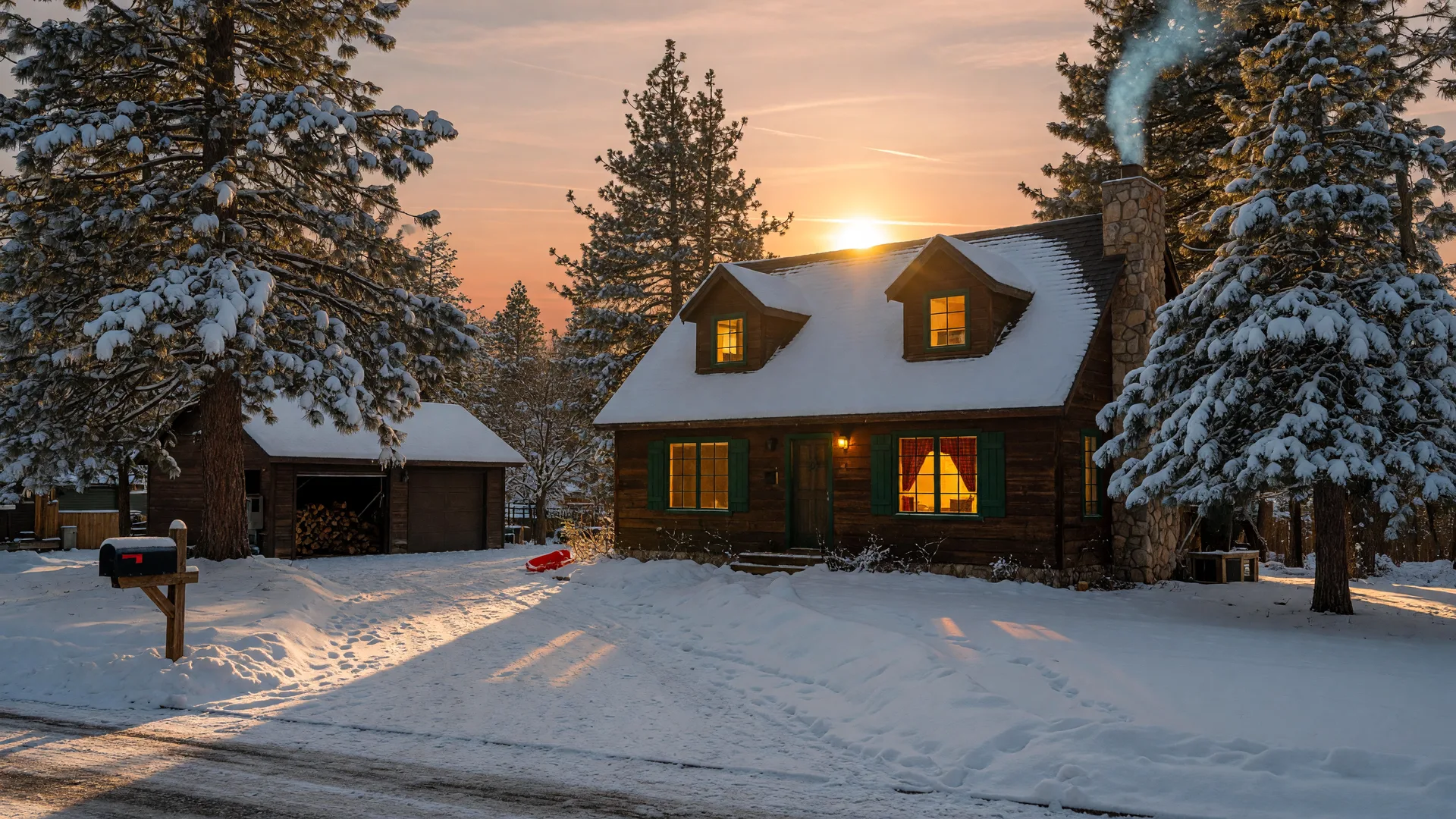
Big Bear winters are real winters, and they are part of the charm, but they come with responsibilities. From about November into late April, you are required to carry chains or cables in your vehicle, even on dry days, and when a storm moves in Caltrans puts chain controls in place and may require them on most vehicles. Four-wheel drive with snow-rated tires helps, but the rules still apply, and the wisest habit is simply to carry chains, know how to put them on before you need them, and keep an emergency kit in the car. On the home front, the city and county plow the main roads, but your driveway is yours, which is why a snow shovel, a good pair of boots, and a plan for who clears your driveway are all part of moving here. The trade-off is a valley that looks like a postcard all season long, with skiing at Big Bear Mountain Resort, sledding hills, and some of the quietest, coziest months of the year.
Mountain homes run differently than valley homes
Every buyer who moves up here from the flats asks the same questions, and they are the right questions. Electricity comes from Bear Valley Electric Service, and natural gas from Southwest Gas serves much of the valley, but plenty of homes, especially cabins, heat with propane. Some homes are on city water and sewer, while others rely on a private well and septic. The difference between those can matter a lot, and it is baked into every property differently, even from one street to the next. It sounds like a lot, and that is exactly why I wrote a plain-language guide to how mountain homes actually run. Read it before you fall in love with a specific property, and you will shop with completely different eyes.
Four real seasons, each with its own rhythm
Big Bear sits about 6,750 feet up in the San Bernardino Mountains, and that elevation is the whole secret. It means more than 300 days of sunshine a year and four distinct seasons, which is something the lowlands simply do not offer. Summers are warm and bright with cool mountain nights, falls turn golden and crisp, winters bring real snow, and spring brings wildflowers and that quiet, thawing calm between ski season and summer. Locals get used to living by the seasons, and honestly, it is a lovely way to mark the year. If you want the full tour of what each season is really like to live through, my season-by-season guide walks you through all twelve months.
School, community, and the small-town feeling
The whole valley is served by the Bear Valley Unified School District, one district from elementary through high school, which means kids in Big Bear Lake and Big Bear City grow up together in the same schools. The permanent population of the valley is only about 16,000 to 17,000 people, and that small size is exactly what makes it feel like a community. You see familiar faces at the grocery store, neighbors wave on the road, and people pitch in on the things that keep the valley beautiful, from trail work days to forest care. Tourists see the weekend version of Big Bear. Residents live the other one, and it is warm and welcoming.
Weekdays are quiet, weekends are busy
Be ready for the rhythm of a resort town. Weekdays in Big Bear are calm, peaceful, and full of wildlife, and then the weekends and holidays bring the visitors who power the local economy. That ebb and flow is part of life up here, and locals learn to love it: enjoy the lake and the trails on quiet weekday mornings, and save the weekends for family and friends. The Village, the walkable heart of town centered on Pine Knot Avenue, packs around 120 shops, restaurants, and galleries into a few cheerful blocks, and it is the place you run into everyone you know. It also happens to be where the community gathers for its big moments all year long.
The things only a local can tell you
Here is the part no map, no listing, and no online search will teach you. Which streets drift in a big snow and which ones clear first. Which lots catch the afternoon sun and which stay in shadow all winter. Whether a home is set up for true year-round living or only for weekend getaways. Whether that sweet cabin has a well that runs dry in a dry year or a septic that has been well cared for. How a neighborhood actually feels in February, not just in July. That is the local knowledge that only comes from being a lifelong Big Bear resident, and it is the reason I have spent 20+ years in this valley's real estate loving every minute of it. I know this community because I have lived it my whole life, and I love helping people find their own place in it.
If you are even halfway serious about moving to Big Bear, I would love to hear your story. No pressure, just a real conversation about what you are looking for and what life up here can look like. Call, text, or email me anytime, and let us start with what to know before you move, so your first year here feels like a homecoming.
Your Big Bear Realtor, Holly Gardner.
Sources & further reading
- Big Bear Tourism Bureau, Roads to Big Bear
- Big Bear Tourism Bureau, Winter Driving Safety & Chain Requirements
- Big Bear Mountain Resort, Snow Chains & Cables
- Bear Valley Unified School District
- City of Big Bear Lake, Local Utilities
- Mountain utilities guide
- Which Big Bear community is right for you
- Living in Big Bear year-round
- Neighborhood guides
Elevation, climate, road, and utility details are compiled from the public sources above and change with the seasons. This article is general information from a local perspective, not legal, financial, or investment advice.
Ready to talk Big Bear real estate?
Whether you are buying, selling, or investing, Holly would love to hear your story. No pressure, just straight answers.